
Overgrown Trees Create Real Safety and Access Problems
Tree trimming in Edgewood for properties where overhanging limbs, dense canopy, or hazardous growth is blocking access, equipment movement, or structural clearance
Limbs extending over rooflines, outbuildings, or equipment paths are among the most common and most preventable hazards on acreage properties in East Texas. Resnick Residential and Commercial Services provides tree trimming, pruning, and full removal for residential and commercial properties in Edgewood, addressing both routine maintenance and site preparation needs. Whether the work involves a single hazard tree or a multi-acre clearing job, the scope determines the approach.
Tree trimming on rural and acreage properties in this region typically involves more than removing a few overhanging branches. Limbing—the removal of lower branches along the trunk—is commonly needed to create equipment clearance along fence lines, driveway corridors, or work areas. When full removal is required, the process includes felling, sectioning, and debris management. Resnick handles chipping or mulching of debris on-site when the material volume and site conditions allow, which reduces haul-off costs and leaves the ground in a workable state.
Request an on-site evaluation to review current tree conditions and identify specific clearance or safety concerns on your property.
What Tree Work Actually Involves on Acreage Properties
The method used—crew-based hand cutting versus equipment-assisted removal—depends on tree size, location relative to structures, and ground access. A large post oak near a structure requires a different sequence than a cedar cluster along a pasture edge. Resnick evaluates site conditions before selecting the equipment and approach, which affects both the efficiency of the job and how much of the surrounding area is disturbed.
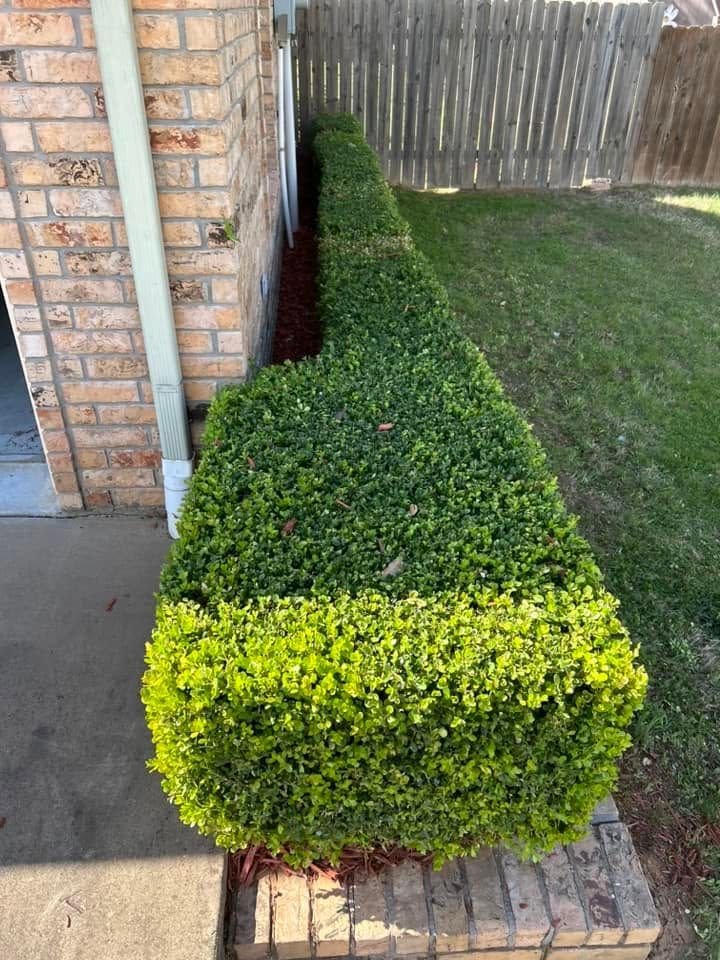
After trimming and removal work is completed, the visible difference is immediate: fence lines become accessible, overhead clearance opens along equipment paths, and hazardous limb weight is removed from trees that were leaning or structurally compromised. On properties where brush had closed in around outbuildings or access roads, the site becomes navigable again without ducking, rerouting, or working around obstruction.
Debris handling is a separate decision point worth discussing before the job begins. Chipping produces a mulch byproduct that can be spread on-site, which some property owners prefer for ground cover in low-traffic areas. Full haul-off is also available when the volume is heavy or the site doesn't have a practical use for the material. The right choice depends on the amount of debris generated and how the property will be used afterward.
Common Questions About Tree Trimming and Removal
Acreage owners in Edgewood often have questions about scope, debris, and timing before scheduling tree work. The answers below reflect conditions and considerations common to properties in this area.
What is the difference between trimming and limbing, and when is each appropriate?
Trimming typically targets branch ends and canopy shape, while limbing removes lower branches from the trunk to create vertical clearance—limbing is most commonly needed along driveways, fence lines, and equipment corridors where overhead height matters more than canopy shape.
How does tree size affect whether a crew or equipment is used?
Smaller trees in open areas can often be handled with hand tools and a ground crew, while larger trees—especially those near structures or with significant trunk diameter—require mechanical equipment to fell and section safely without damaging what's around them.
When is the best time of year to schedule tree trimming in Edgewood?
Late fall and winter trimming, when deciduous trees have dropped their leaves, makes it easier to identify dead wood, weak branch attachments, and structural problems that are hidden by foliage during the growing season.
What happens to the debris after a tree is removed?
Depending on the volume and site conditions, debris can be chipped into mulch and spread on-site, piled for later burning where permitted, or hauled off entirely—Resnick determines the best option based on the scope of the job and your property's layout.
Why do properties in this region need more frequent tree maintenance than urban lots?
East Texas acreage properties typically have a higher density of native hardwoods and fast-growing cedar, which can overtake fence lines, crowd structures, and create fire and wind-load hazards more quickly than managed suburban plantings.
Resnick Residential and Commercial Services works on acreage-scale tree projects across Edgewood and the surrounding communities. To discuss your property's current condition and what the work would involve, call (469) 782-8226 to arrange a site visit.