
Clearing Acreage Before Development Begins
Land Clearing in Edgewood for overgrown residential and commercial sites requiring full vegetation removal before construction
Resnick Residential and Commercial Services clears acreage in Edgewood for property owners and developers preparing land for residential builds, commercial construction, and site development. East Texas properties frequently carry dense hardwood stands, thick brush understories, and years of accumulated debris that require equipment-based removal before any grading or foundation work can begin. The specific combination of vegetation type and acreage on a given parcel determines which equipment gets deployed and how the crew stages the work across the site.
Land clearing in this region involves more than running a bulldozer across a lot. Equipment selection depends on whether the site holds mature timber, dense cedar or sweetgum thickets, vine-covered brush, or a mix of all three—each requiring a different approach to avoid excessive ground disturbance or leaving root masses that create problems during grading. Debris management decisions also factor into the plan: material can be pushed and burned, ground into mulch on-site, or hauled off depending on site conditions, local burn restrictions, and what the development phase requires next.
Request a site walkthrough to evaluate vegetation density and determine the right equipment and crew configuration for your acreage.
How Land Clearing Prepares a Site for What Comes Next
The clearing process works in sequence: timber and large brush are addressed first, followed by stump and root management, then debris consolidation or on-site processing. On East Texas acreage, the root systems of established hardwoods often extend well beyond the visible canopy line, which means a cleared surface can still conceal subsurface material that causes settling problems if not addressed before grading begins. Resnick evaluates root depth and spread during the clearing phase so grading crews aren't discovering buried obstructions mid-project.
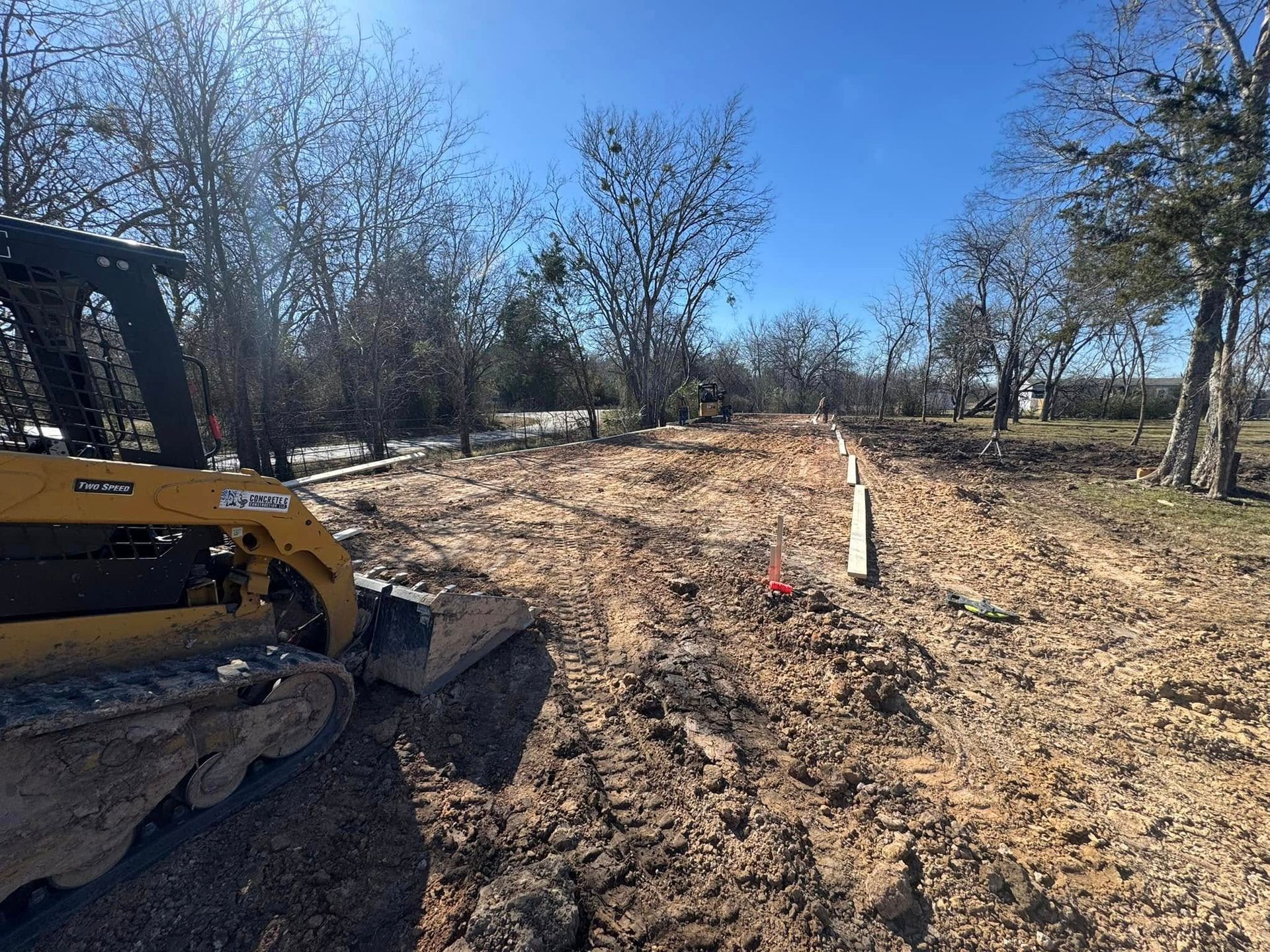
Once clearing is complete, you'll see a defined, accessible site where vegetation has been fully removed to a consistent ground level—no standing stumps, no debris piles blocking access, and no surface irregularities that would interfere with equipment movement during grading. The transition from cleared land to active construction site happens without delay because the site prep sequence is planned before clearing starts, not figured out afterward.
Acreage and vegetation density drive both crew deployment and project scope. Larger parcels with mixed timber and brush may require multiple equipment types operating in different zones simultaneously, while smaller residential lots with moderate brush can often be addressed with a single machine and crew. The scope is confirmed during the initial site evaluation, so there are no surprises once work begins.
Common Questions About Land Clearing
Property owners preparing land for the first time often have questions about sequencing, costs, and what the cleared site will look like when work is finished. The answers below address the most common points that come up during bid conversations in Edgewood.
What equipment is used for land clearing on East Texas acreage?
Equipment selection depends on vegetation type and density—tracked excavators and bulldozers handle large timber and root removal, while forestry mulchers process dense brush and smaller trees in a single pass without requiring separate debris hauling.
How does vegetation type affect the clearing timeline?
Dense hardwood stands with mature root systems take longer to clear than open brush because stump grinding or root raking adds a separate phase; a site assessment identifies these conditions before scheduling begins.
When should land clearing happen relative to other site prep work?
Clearing should be completed before any grading or excavation begins, as buried root masses and uneven ground left by removed stumps will interfere with accurate grade work if not addressed first.
Why does clearing cost vary so much between properties in Edgewood?
Acreage, vegetation density, site access for equipment, and debris disposal method all affect the bid—a one-acre open brush lot and a one-acre mature timber parcel require entirely different crew deployments and equipment hours.
What does a fully cleared site look like when work is finished?
Surface vegetation, stumps, and debris are removed to consistent ground level, equipment can access all areas of the site without obstruction, and the land is ready for grading, excavation, or foundation work to begin immediately.
Resnick Residential and Commercial Services bids land clearing projects across Edgewood and the surrounding East Texas area, with multi-project capacity that accommodates both single-lot residential sites and larger commercial acreage. Call (469) 782-8226 to schedule a site evaluation and receive a detailed bid based on your
property's specific vegetation and acreage conditions.