
Site Grading That Foundations Actually Depend On
Dirt Work in Edgewood for residential and commercial sites requiring excavation, grading, and soil preparation before construction
Uneven lots, clay-heavy soils, and drainage problems that show up during construction are almost always traceable to dirt work that wasn't done with enough precision at the site prep stage. Resnick Residential and Commercial Services provides excavation, grading, and soil compaction for residential and commercial projects in Edgewood, addressing these conditions before they become structural problems. East Texas soils vary significantly across short distances—transitional clay profiles that hold water after rain require different cut-and-fill decisions than sandier subsoils—and the crew accounts for that variability when establishing grades.
Dirt work for new construction typically involves several distinct phases that are planned in sequence: rough cut to establish approximate grade, excavation for foundation placement or utility corridors, soil movement and compaction in fill areas, and fine grading to achieve drainage slopes that meet builder specifications. Compaction is the step most commonly skipped or underperformed on residential lots, and it's the one that causes long-term settling issues under slabs and driveways. Resnick's crew manages each phase with equipment matched to the project scale, handling between three and five larger projects monthly with a five-person operation capable of running simultaneous crews on multi-phase developments.
Set up an on-site review to assess your lot's current grade, soil conditions, and what excavation scope your project requires.
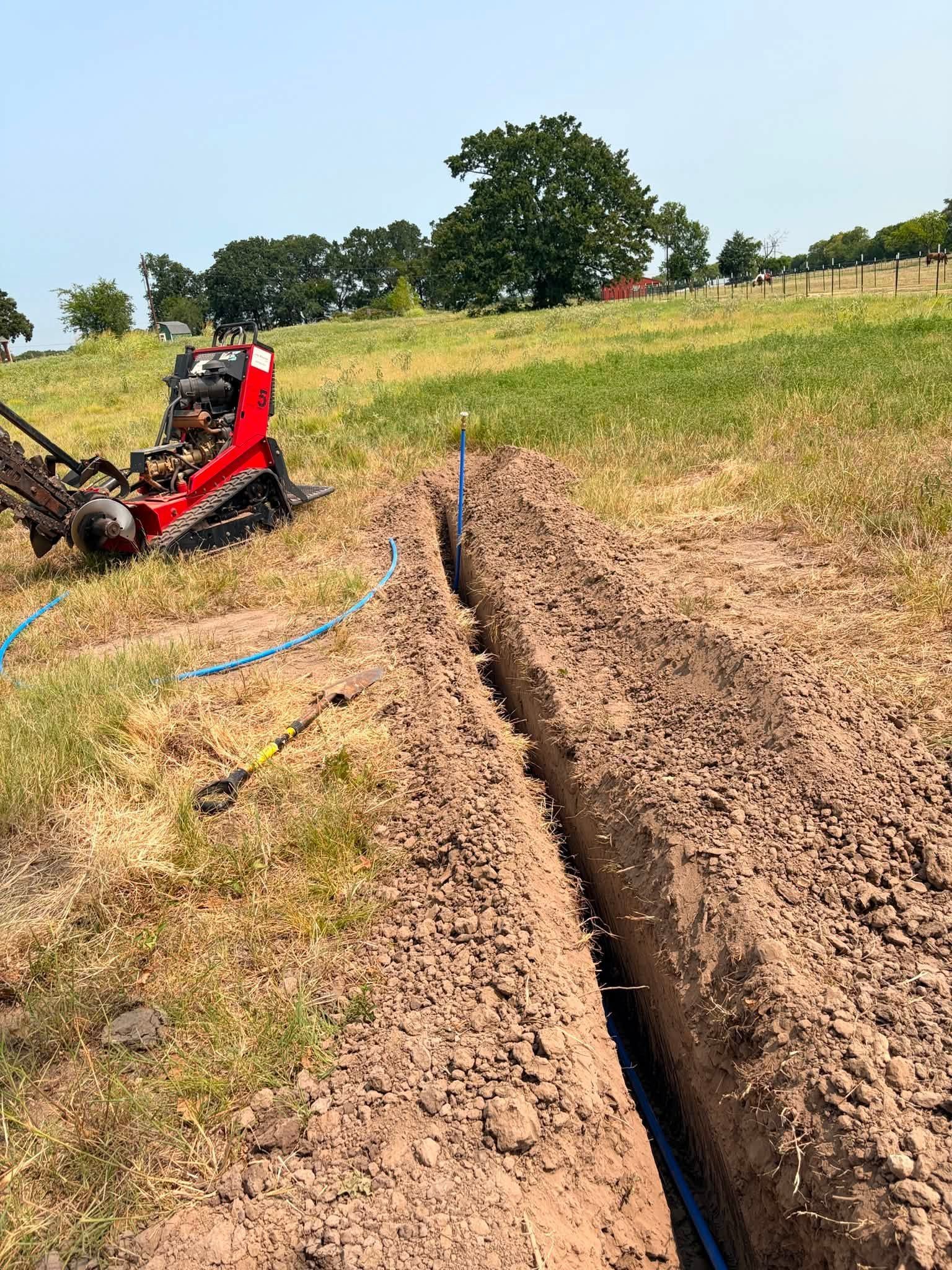
What Proper Dirt Work Requires on a Build Site
Accurate grading starts with understanding where water currently moves across the site and where it needs to move after construction is complete. On East Texas lots, seasonal rainfall is heavy enough that drainage slope errors—even small ones—result in water pooling against foundation walls or collecting under slabs within the first few years. The grading plan accounts for finished surface elevation, foundation perimeter drainage, and the relationship between the structure's footprint and surrounding grade so water routes away from the building rather than toward it.
After dirt work is complete, the site shows a consistent, compacted surface at the correct elevation for foundation placement, with drainage slopes visible across the lot perimeter. There are no low spots that would trap water during rain, and the grade transitions smoothly from the building pad to surrounding areas without abrupt elevation changes that would complicate landscaping or driveway approaches later. Builder crews can begin foundation work immediately without regrading or correcting drainage issues discovered mid-project.
Project costs in the ten-thousand to twenty-thousand dollar range and above are typical for full site preparation on residential builds, though scope varies based on lot size, existing grade conditions, and the amount of soil movement required. Cut-and-fill ratios matter here: sites where cut material can be redistributed on-site as fill reduce overall cost, while sites that require soil import or export add a logistics component that affects both timeline and budget.
What Property Owners Usually Ask About Dirt Work
Clients planning new builds or lot preparation often have questions about what dirt work includes, how compaction is verified, and how grading decisions get made. The following covers the most frequently raised points during project consultations in Edgewood.
What does the excavation phase actually involve on a residential lot?
Excavation removes soil to the depth and footprint required for foundation placement, utility trenches, or drainage structures—the cut depth and boundary are determined by foundation design and builder specifications before work begins.
How is soil compaction verified after grading is complete?
Compaction is checked in layers as fill is placed, not just at the finished surface; skipping this step-by-step verification is the primary reason fill areas settle unevenly under concrete slabs after construction.
Why does grading matter more in East Texas than in drier regions?
Clay-heavy soils in this area expand when wet and contract when dry, which means improperly graded sites experience more dramatic grade shifting over time than sandy or stable-soil regions where drainage is less of a factor.
When during a construction project should dirt work be scheduled?
Site prep and grading should be completed and inspected before any foundation pour is scheduled—attempting to combine or overlap these phases creates compaction and elevation problems that are expensive to correct after concrete is placed.
How does Resnick handle projects that require both clearing and grading?
For sites that need vegetation removed before grading can begin, the clearing and dirt work phases are coordinated in sequence, with grading beginning after the cleared surface is confirmed free of buried root masses that would compromise compaction.
Resnick Residential and Commercial Services manages dirt work from initial excavation through final grade on residential and commercial sites in Edgewood. Call (469) 782-8226 to discuss your project's soil conditions, lot size, and grading requirements with a crew that handles multiple active projects at scale.