Concrete Surfaces Built for Heavy Use and Weather
Concrete Work in Edgewood for residential and commercial properties needing durable pads, driveways, and site finishing after excavation and grading
East Texas weather cycles—hot summers followed by seasonal moisture swings that cause clay-based subsoils to expand and contract—create conditions where concrete placed on improperly prepared ground begins showing edge cracks and surface displacement within a few years. Resnick Residential and Commercial Services provides concrete placement for pads, driveways, and utility areas in Edgewood, integrating the concrete phase with the site prep and grading work that determines whether a slab performs over the long term. Clients who need concrete as part of a larger construction or development project work with a single contractor from excavation through finished surface, rather than coordinating multiple crews whose sequencing decisions don't always align.
Concrete work at the site level involves more than mixing and pouring. Subgrade preparation, formwork placement, reinforcement specification, and finished surface slope are all decisions made before concrete is placed—and each of those decisions affects how the slab performs. Drainage slope is particularly important on East Texas sites where water that can't move off a concrete surface has nowhere to go except under the slab edge, where it accelerates erosion of the subbase and eventually creates the voids that cause cracking and surface settlement. Resnick builds drainage slope into every concrete surface, directing water toward designed runoff points rather than leaving it to find its own path.
Discuss your project's concrete requirements directly with Resnick Residential and Commercial Services to confirm subgrade conditions and surface specifications before scheduling placement.
The Difference Between Surface Finishing and a Complete Concrete Install
Concrete placement for driveways and house pads requires attention to thickness, reinforcement, and joint placement in addition to surface finish. Slabs intended for heavy vehicle or equipment access need adequate thickness and reinforcement to distribute load without cracking through the slab body—a detail that varies based on what the surface will carry. Control joints are cut or tooled into the slab at planned intervals to direct shrinkage cracking to predictable locations rather than allowing it to propagate randomly across the surface, which is what happens when joints are omitted or spaced incorrectly.
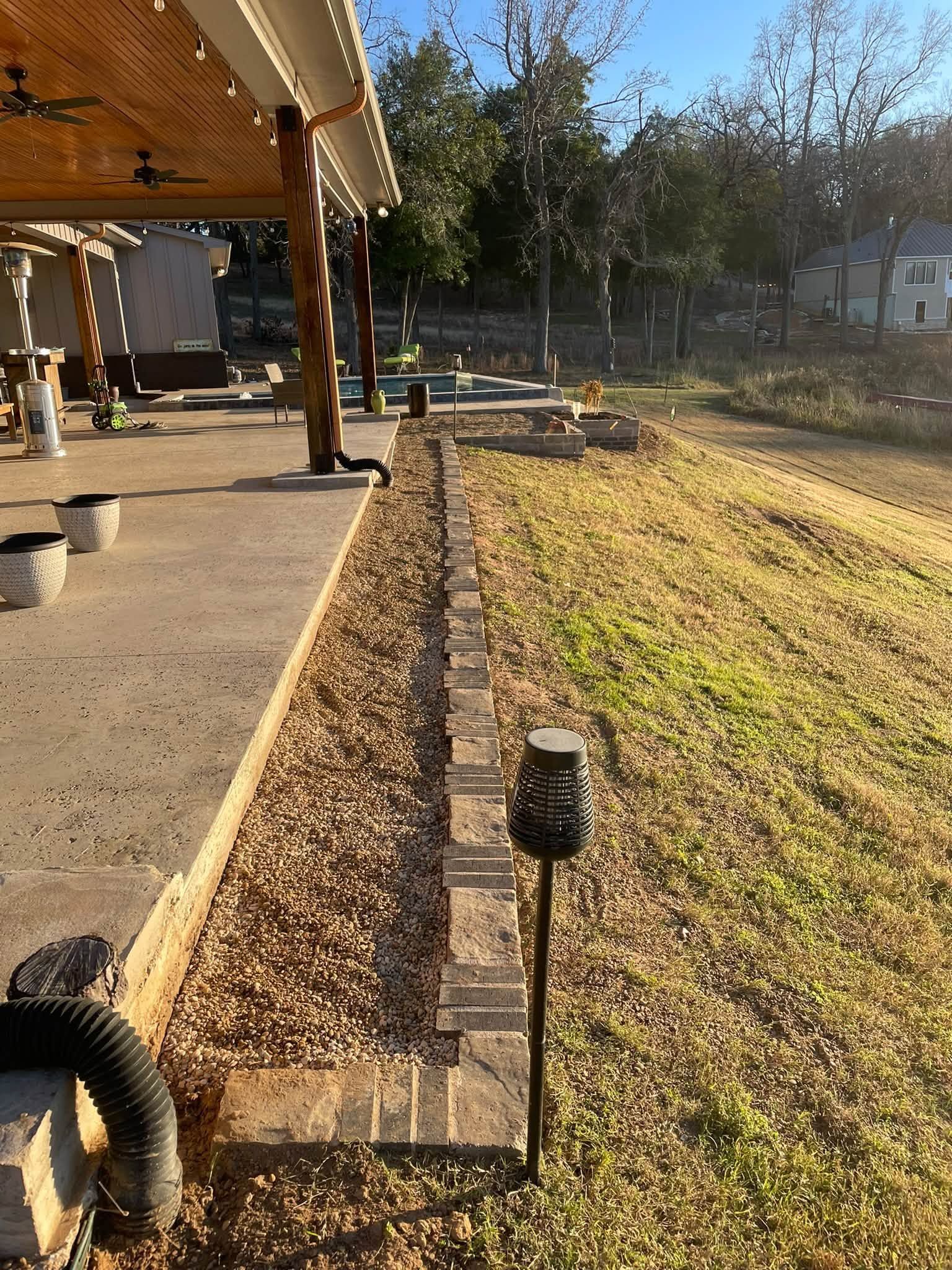
After concrete work is complete, the finished surface is uniform in color and texture, drains visibly toward the intended direction without low spots that collect standing water, and edges are consistent along the full perimeter of the pour. On driveway applications, the transition from concrete to existing grade is flush enough that vehicles cross without abrupt height changes that stress the slab edge over time. For utility and equipment pads, the surface is level within the tolerances the application requires and load-bearing across the entire pad area, not just the perimeter where formwork provided support during placement.
Concrete services at Resnick are offered as part of full-scope site projects that include excavation, grading, and finishing—which means the subgrade under any concrete placement has already been prepared and compacted to the standard the slab requires, rather than being accepted as-found from a previous contractor whose work may not meet the same standard. Standalone concrete work is also available for projects where site prep has already been completed by another party, with a subgrade review conducted before placement begins to confirm the surface is ready.
What Clients Ask Before Concrete Work Starts
Property owners and builders coordinating concrete work in Edgewood typically want to know about subgrade requirements, how surface use affects specifications, and what the finished product should look like when work is complete. The following covers the questions that come up most often during preconstruction planning.
How does subgrade condition affect how long a concrete slab lasts?
A slab placed on uncompacted or unstable subgrade loses support unevenly over time as the ground beneath settles, leading to cracking and surface displacement that can't be corrected without removing and replacing the concrete above.
What thickness is appropriate for a residential driveway versus an equipment pad?
Residential passenger vehicle driveways are typically poured at four inches minimum, while pads designed for heavy equipment, loaded trucks, or agricultural machinery require six inches or more depending on load distribution requirements.
Why does drainage slope matter on a concrete pad in Edgewood specifically?
Clay subsoils in this region don't absorb water quickly, so any flat concrete surface that allows water to pond will consistently route moisture toward slab edges and underneath the pour, where it undermines the subbase and creates voids that eventually cause cracking.
How are control joints used to manage cracking in a new slab?
Control joints are placed at planned intervals—typically every eight to twelve feet depending on slab thickness—to give the concrete a designated path for shrinkage cracking rather than allowing cracks to form randomly across the surface.
When is the right time to schedule concrete during a larger construction project?
Concrete should follow grading and compaction but precede any finish work or landscaping that would be damaged by equipment access during placement; on projects where Resnick handles both site prep and concrete, these phases are sequenced without gaps in the project schedule.
Resnick Residential and Commercial Services manages concrete placement as a standalone service and as part of full-scope site development projects in Edgewood. Call (469) 782-8226 to review your surface requirements, subgrade conditions, and how concrete fits into your project's overall construction sequence.